Cultivating the Contemplative


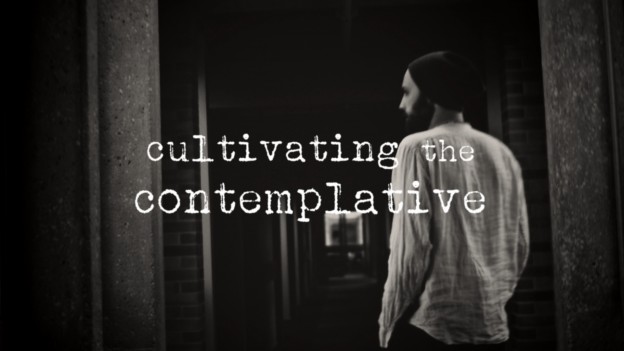
Why bother? Why cultivate contemplative spirituality in a demanding world with insatiable needs?

To sustain, not just to sustain, but to thrive in difficult vocations of hope we found that we need to nurture a deep spirituality.

We’re all interested in making the world a better place. But it’s not easy. Learning to develop contemplative practices that make room for silence, solitude, and stillness allows our inner life to impact the external world for good.

The world is in desperate need of healing. And we found that to the degree that we are healed, the world will be healed.

We need both. The contemplative and the active have to go hand in hand.

Film produced by The Work of the People with music from Sleeping at Last


Reflecting on Gravity’s One Year
Anniversary

Today marks the one-year anniversary of Gravity, a Center for Contemplative Activism.

We have much to celebrate—the press and publicity, the sold out retreats, the tens of thousands of people we spoke with at conferences or on campuses or on book tour, and the nearly quarter of a million dollars we raised this past year.

A year ago, we set out to create.

To create something new.

A year ago, we determined to do something.

To do something different.

And today we want to reflect on what it was we set out to do.

Gravity is fresh.

Gravity is honest.

Gravity is human.

The start-up was quiet and undramatic, but it was, and for that matter still is, very important work.

On a confessional level, starting the Center allowed space to reflect on failures we experienced in our personal lives and in our community—sifting through the ways we used ourselves up personally, spiritually, and emotionally in two decades of demanding social justice work.

If we are honest, if we are completely candid, our motivations in starting this Center for Contemplative Activism were birthed out of our own pains, our deep longings to help people do good better.

We felt compelled to launch the to Center to serve humanitarians, practitioners, and activists who frequently take better care of others than they do themselves—folks who seem to perpetually teeter on the edge of burnout hoping that they can in fact do good better if they can just keep it together.

Ultimately Gravity exists to help the women and children in red-light areas, refugee camps, sewers and slums who deserve better. Who can’t afford another painful loss or sad goodbye. Who don’t need young idealists to show up in their neighborhoods with promises of hope or freedom only to last a couple years before they decide they want to go back to grad school or pour coffee 20 hours a week while figuring out what else they want to do with their privileged freedoms.

Looking back on nearly 20 years in international work among those in poverty has given us an opportunity to reflect deeply and build off of that reflection, creating something new—something beautiful that doesn’t exclude or condemn, but rather affirms and celebrates.

Today there are more people enslaved than any other time in history. Unthinkable numbers of people have no access to clean drinking water. Disparity between rich and poor has never been greater. Wars continue to rage. And our planet is eroding before our eyes.

The way we’ve been living, serving, and giving of ourselves to the world is not working.

We need a new way to live our faith, express our potential, and give of ourselves for the good of the world. The future of our existence in an increasingly pluralized global reality depends on it.

It is time for contemplative activism.

It is time to do good better.

Change stirs up the best and worst of us. A year ago we set out to launch Gravity and the response of friends, family, and supporters was mixed. We knew we were taking a risk. We knew we were laying the entirety of our lives down, in the hopes that new life would emerge.

It didn’t come without resistance. In fact, some of the most hurtful letters we’ve ever gotten in our 20 years of non-profit and mission work, have come since we’ve started the Center.

Many looked on with suspicion.

Some of our supporters—people who had partnered with us for 10, 15, 20 years—quietly slipped away. Some of them were honest enough to tell us why they pulled their donations—blatantly rebuking us, charging us with not being “Christian enough.”

Ironic, because our faith has never been deeper.

Others courageously dared to believe in something more and stayed with us. Daring to believe that there’s a way to live our faith that doesn’t exclude, and a way to heal the world that brings unity.

And then they came.

Those dreaming of a better world came to offer their support and solidarity.

Today, people from all walks of life are beginning to grasp the crucial connection between contemplation and action.

We want to thank the people who’ve gotten behind us this year.

We want to thank the people who took a risk.

We want to thank the people who actually believed in this crazy, audacious vision.

And this is just the beginning.

• On October 2 we will host our 2nd annual fall contemplative retreat—bringing together 50 leaders from all over North American to cultivate sacred silence, solitude, and stillness.
• In December we’ll partner with New Monasticism’s School for Conversion for our 2nd 21st Century Freedom Ride, a pilgrimage of solidarity and hope.
• 2014 we’ll initiate the long-awaited-for Asia and Africa pilgrimages.
• Throughout next year we’ll continue to work with various churches, universities and communities in facilitating contemplative retreats and speaking forums.

A new world awaits us.

A world that includes.

A world that unites.

A world that celebrates everyone.

We can’t realize this dream alone.

We need each other.

We invite you to join us in making the world a better place—not only with our bare hands, but with our consent, with our silence, with our solitude, with our stillness. With a renewed imagination, with a holy ambition.

We’re asking you to join us.

Together we can make this world a better place.
Why the Name “Gravity?”

We often get the question, “So why did you choose the name ‘Gravity’?” It’s a great question. One of our teachers, Thomas Keating, O.S.O.C., helps shed light on the concept.

Keating, a 90 year old Cistercian monk of the strict observance is one of the leading voices illuminating the relevance of Christian faith in the 21st century. He finds himself in the company of other great Western Christian teachers like Richard Rohr, O.F.M. and Cynthia Bourgeault, Episcopal priest.

The impact of Keating’s teaching on Christian faith today and in centuries to come is and will be of a magnitude that the world has probably not seen for 400 years—since the time of the Reformation.

If you don’t know of Keating, it’s time to pay attention.

A student of Yale University and Fordham and student of psychology and philosophy, Keating helps us understand the implications of theological and scriptural concepts on faith and spiritual practice. Knowledge of psychology and human development theory unavailable 2,000 years ago at the time of Jesus and New Testament writers breaks open for us concepts like, “In Christ you are a new creation;” and “Why is it I do what I don’t want to do…” (Romans 7; 2 Corinthians 5:17; Galatians 6:11 & 15). Drawing on St. Paul’s teaching on the old and new creation and Thomas Merton’s 20th century language “true self” and “false self,” Keating illuminates what human transformation is all about.

In his book, Invitation to Love, Keating explains the formation of psychological programs for happiness is based in infantile biological needs for security and survival, power and control, and affection and esteem.

“As a consequence [of the formation of the false self], our emotional life ceases to grow in relation to the unfolding values of human development and becomes fixated at the level of the perceived deprivation. The emotional fixation fossilizes into a program for happiness. When fully formed it develops into a center of gravity, which attracts to itself more and more of our psychological resources: thoughts, feelings, images, reactions, and behavior. Later experiences and events in life are all sucked into its gravitational field and interpreted as helpful or harmful in terms of our basic drive for happiness. These centers are reinforced by the culture in which we live and the particular group with which we identify, or rather, overidentify.” (Invitation to Love, Keating, p. 27)

“The false self develops in opposition to the true self. It’s center of gravity is the self as separate from God and others, and hence turned in on itself.” (Invitation to Love, Keating, p. 59)

Needs that are fundamental to a child become a problem as we grow into adulthood and one can’t help but overidentify with them. Overidentifying with these programs creates the false self and leads to much of the breakdown of family and community, as well as violence, exploitation, poverty, war and terrorism.

The Christian invitation is to change our behavior that leads to so much destruction of ourselves and others and grow up (Acts 26:20; 1 Cor 3:1-3; 2 Corinthians 7:2 & 9, Ephesians 4; Hebrews 5:11-14; Hebrews 6:1; 2 Peter 3:9).

To use language that speaks to 21st century people, the Christian spiritual journey is an invitation to subvert the center of gravity within us that is controlled by the false self and allow that center to be replaced with the presence of God who holds our true self, unleashing unimaginable goodness in the world (1 Corinthians 6:19; Ephesians 4:5,9).

The name ‘Gravity’ was chosen for our Center to support this transformation in your life. It IS possible to live from the Divine center of gravity within us that orders our chaos and frees us to live the values of the Gospel: freedom, reconciliation, peace and unconditional love. Values that can change the world.

Together we can do good better. Thanks for joining this revolutionary movement.


See also, Greg Richardson’s thoughtful blog post on Gravity.

Out of Blame, Into Becoming

by Kevin Harris


For about 20 years, Chris and Phileena Heuertz directed the organization Word Made Flesh. With communities around the world, they seek to serve Jesus among the most vulnerable of the world’s poor. They incarnationaly live among those in difficult situations such as sex slavery, prostitution, and with child soldiers. A commitment to friendship, submission to one another and community are woven into the DNA of their organization, but they found that at times the tragedies and grief that they experienced while doing life with those on the margins slowly wore down some of their staff members to the point of burnout.

Chris and Phileena discovered that nearing burnout was an invitation to go deeper to delve into contemplative spirituality. To be actively engaged in mission and the lives of others with redemptive impact, they found the need to root their work and activism in a spirituality that helped them to rest in God and dismantle their notions of their false selves (the image we have built of ourselves and who we think we are that serves to please, satisfy and protect our ego) to more fully live out of their being beloved. Contemplative spirituality includes disciplines with the purpose of learning to “create space to be still and rest in God beyond words, thoughts and feelings. It is to abide in the love of God, to attend to the inner life, and to simply be with God in solitude, silence and stillness” (Phileena Heuertz in Pilgrimage of a Soul).

After finding that this contemplative spirituality helped to sustain them and fuel their activism within their communities at Word Made Flesh, Chris and Phileena founded Gravity │ a Center for Contemplative Activism to help others engaged in difficult work and ministry to “do good better”….
Read the rest of the post here

The Road Ahead: Connections, Connections

The Road Ahead: Connections, Connections :: by Julian Collette

Rummaging for God: Praying Backwards Through Your Day

“Rummaging for God: Praying Backwards Through Your Day” :: By Dennis Hamm, SJ

About 20 years ago, at breakfast and during the few hours that followed, I had a small revelation. This happened while I was living in a small community of five Jesuits, all graduate students in New Haven, Connecticut. I was alone in the kitchen, with my cereal and the New York Times, when another Jesuit came in and said: “I had the weirdest dream just before I woke up. It was a liturgical dream. The lector had just read the first reading and proceeded to announce, ‘The responsorial refrain today is, If at first you don’t succeed, try, try again.’ Whereupon the entire congregation soberly repeated, ‘If at first you don’t succeed, try, try again.’” We both thought this enormously funny. At first, I wasn’t sure just why this was so humorous. After all, almost everyone would assent to the courageous truth of the maxim, “If at first…” It has to be a cross-cultural truism (“Keep on truckin’!”). Why, then, would these words sound so incongruous in a liturgy?

A little later in the day, I stumbled onto a clue… [read the rest of the article here]

A “Starter Library” for Contemplative Activists :: The Must-Reads on Contemplative Spirituality for People with Active Lives

A Grounding Place To Root Social Engagement In Contemplative Spirituality

Gravity, a Center for Contemplative Activism, is a grounding place for people to root their social engagement in a deep, contemplative spirituality in order to do good better.

Gravity doesn’t exist simply for social justice activists, but for anyone and everyone who wants to make the world a better place. This is tough work and everyone involved needs to be grounded in the effort to bring love, hope and peace to the world.

Through Gravity we will host 3-4 day contemplative retreats and 1-day contemplative sessions to introduce contemplative spirituality—demystifying and dismantling the intimidating barriers that often keep people from cultivating contemplative practices that nourish the soul.

We will develop a brokerage for trained and certified spiritual directors to connect with those who are in search of capable spiritual direction.

We will equip people for personal retreat and sabbatical.

We will facilitate pilgrimage to significant spiritual centers such as Assisi, Italy and Santiago, Spain. Harmonizing the dissonance between our inner and outer lives, these pilgrimages offer opportunities of spiritual awakening.

We will organize immersion trips of solidarity with those enslaved in the commercial sex industry, victimized in sweatshops, dehumanized in slums and red-light areas. Small, thoughtfully selected groups of conversation partners will travel to cities like Calcutta, India; Kathmandu, Nepal; Bangkok, Thailand; Lima, Peru; and La Paz/El Alto, Bolivia.

Through Gravity, a Center for Contemplative Activism we will support those who want to do good better.

No More Illusions : Contemplative Activism, A Model for Mission

“No More Illusions :: Contemplative Activism :: A Model for Mission” in Catalyst Groupzine by Phileena + Chris Heuertz

Live Better. Love Better. Serve Better. …Do Good Better

Though activists and social justice workers live faithfully into compelling vocations of compassion, they are sometimes the grumpiest, crustiest and meanest people out there—often down right unpleasant folks to be around.

Many who fight to alleviate poverty are unhappy. Loneliness and sadness are familiar companions in their work for hope.

Sometimes the stereotypical “dirty hippie” social justice advocate offers an uninviting example of how to serve beautifully for the common good.

Many practitioners involved in causes, charities or communities of hope often do a much better job of taking care of those they serve than they do taking care of themselves.

Sadly, many social justice activists are unhealthy—physically, mentally, emotionally and spiritually. Of course this is understandable given that most folks involved in grassroots work in places of poverty experience versions of secondary post-traumatic stress disorders. What they see, the work they do, and the solidarity of suffering with their exploited friends ultimately takes a toll on their personal health.

It is the luxury of the non-poor to be able to make healthy choices and options for themselves, but in many cases this comes with a price—feelings of guilt or undue self-critiques of entitlement.

Often those engaged in the difficult work of justice perpetually teeter on the edge of burnout. Countless young people sign-up for volunteer opportunities, internships and even careers of service and while some find ways to sustain and thrive in these callings most are not as fortunate. It’s not uncommon for activists to leave vocations of service disillusioned. Some even walk away from their faith.

We can live better.

We can love better.

We can serve better.

…we can do good better.

It Will Take a Movement…

For 20 years we (Phileena and Chris Heuertz) have given ourselves to grassroots movements of hope among some of the most vulnerable of the world’s poorest people. We’ve helped establish multi-ethnic, multi-national and ecumenical communities all across the globe.

In South Asia we founded the region’s first pediatric AIDS care home, offering safe haven and family to children orphaned because of AIDS or suffering with the disease themselves.

During West Africa’s infamous “Blood Diamonds” civil war, while rebels controlled 60% of the territory in conflict, we brought vision, volunteers and resources—ultimately establishing a community to address the needs of children who were forced to fight in battle.

Throughout Eastern Europe, South America and South East Asia we’ve supported women and children—many of them trafficked into prostitution— journey from the commercial sex industry to freedom.

Around the world we have invested in communities of youth who live on the streets, in sewers or slums. Some of these children work on trash heaps scavenging for recyclable or resell-able items. Many are so hungry they “smoke” cellophane bags of paint or glue to curb the hunger pangs. In the worst cases some are forced to sell sex as their only option for survival.

Our vocation of hope has literally taken us all over the world, having lived on four continents and traveled to nearly 70 countries. 

We’ve seen a lot. We’ve sacrificed a lot. We’ve received a lot. We’ve learned a lot.

There’s much good being done in the world and there’s much more that needs to be done.

It will take awakened individuals to make change. It will take transformed communities to forge lasting partnerships towards hope. It will take a movement.


Gravity, a Center for Contemplative Activism is established to support such a movement.

Becoming A Contemplative Activist: Transforming the World Through Spiritual Practices

Becoming A Contemplative Activist: Transforming the World Through Spiritual Practices by Phileena Heuertz for Immense (May/June 2012)

Introducing Gravity, a Center for Contemplative Activism

On September 17 Gravity, a Center for Contemplative Activism was born.

Actually “born” may be too strong of a word—at least today we move into a little start-up office on the north side of downtown Omaha that we will work out of for the next year as we imagine what the Center can become.

For many of you this may come as surprising news. Others know this has been a yearning and dream we’ve held since the spring of 2007 when we walked the Camino de Santiago across Northern Spain. Regardless, since stepping out of our leadership roles in Word Made Flesh earlier this summer we’ve been working hard towards opening the Center.

We understand there are all sorts of questions people have about the Center and our continued participation with Word Made Flesh so we wanted to take a quick moment to address some of those:

What is the purpose of a Center for Contemplative Activism?

The Center will offer education, formation and support to nurture a contemplative imagination for accountable and effective social engagement.

The Center will resource people with active vocations to recalibrate their motivations for social engagement while cultivating a deep spirituality that helps avoid burnout through reflective soul care.

The Center will introduce contemplative spirituality in ways that demystify the common barriers to the contemplative tradition by making prayer practices accessible through contemporary application.

From the Center we will facilitate trainings and retreats on centering prayer and other contemplative practices; we will organize solidarity pilgrimages to places like Assisi and Spain as well as India and Thailand, Peru and Bolivia; and we will work from the Center to support our writing and speaking vocations around notions of Contemplative Activism.

What is “Contemplative Activism?”

This is a question we get a lot and over the next several months we will be developing a position paper that will better answer this question, so stay tuned…

In the meantime, we can at least suggest that Contemplative Activism reconciles our inner and outer lives through the disciplines of solitude, silence and stillness, helping bring adequate attention to our true selves so that we can offer the best of ourselves to the world.

Contemplative Activism supports those who are concerned about the needs of their neighbors by nurturing their inner life to authentically energize their active life.

How does the Center relate to Chris and Phileena’s vocation among people in poverty?

The essential core of our vocations has not changed. Our lives and message will continue to be given to a prophetic witness and engagement with our global neighbors in poverty.

The Center will enable us to do more speaking, teaching and publishing; offer more spiritual and practical support for workers at the grassroots; and consultation for other communities and organizations like Word Made Flesh.

Through the Center we will continue to fight on behalf of our friends and neighbors trapped in poverty.

How does the Center relate to Word Made Flesh?

We will continue to serve Word Made Flesh as Word Made Flesh community members.

Word Made Flesh has pledged to incubate and support the Center by covering rent for the first year. This will give us some time to work out all the intricacies of clarifying vision and values; defining the programs and services; and establishing a tactical plan to enable the Center’s long-term sustainability.

The Center will also support Word Made Flesh community members. They will be able 
to receive the various programs of the Center for their formation and sustainable work in urban poverty.

How can you support Chris and Phileena and the Center?

As you can imagine, this is an exciting and delicate time for us. In some ways we have transitioned from something secure and comfortable (our positions as International Co-Executive Directors of Word Made Flesh) for something new and unknown (founding the Center). With every new venture, there is risk.

We can’t go it alone.

We need partners who share in a vision for a better world to stand with us as we dare to create a new platform that will allow for focused formation of people eager to engage the social concerns of the 21st century. If you’re interested in joining us or supporting us please let us know and we’ll help you find opportunities to get involved.

In the meantime we simply ask that you celebrate with us.

Today is significant.

Though it’s technically more a “move in” day than a formal “launch,” we’re still excited for what all this can and will become.

Follow the Center on Twitter or check out the Center’s Facebook Fan Page to stay tuned for many exciting developments as this all unfolds over the next few months.